Consent Before Debate: Why the Crown's Private Veto Needs Public Rules
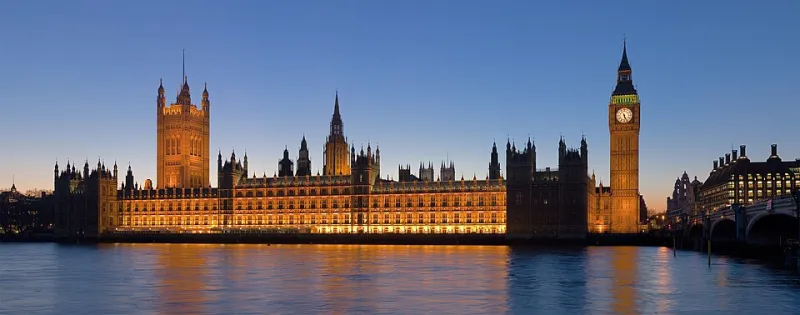
Photo: Diliff, CC BY-SA 2.5, via Wikimedia Commons
A bill is drafted, printed and set down for second reading. Before the minister has opened his mouth, a Privy Counsellor rises to signify that the King has consented to the House proceeding. No division is held. No reasons are published. The House notes the signification and moves on. This is King's Consent, and it is the least discussed veto in the Westminster system.
It is not a veto in the theatrical sense — the Crown does not send the bill back with a red pen. But it is a gate, placed before the debate rather than after it, and the key has for centuries been held in private. That is a constitutional arrangement the centre-right should be willing to examine coolly rather than defend by reflex.
How the mechanism actually works in 2026
Two distinct species are routinely conflated. The first is King's Consent, required where a bill affects the prerogative, the Crown Estate, the Duchy of Lancaster, the hereditary revenues or the Sovereign's private interests. The second is the consent of the Prince of Wales, required where a bill touches the Duchy of Cornwall — now, as in the past, a substantial landowner in its own right.
Under the standing orders of both Houses, consent must be signified before third reading, and in practice it is signified far earlier, often at committee stage, by a minister speaking on the Crown's behalf. The request is not made by Buckingham Palace spontaneously. It originates with the department promoting the bill, is routed through the Palace and vetted in Whitehall, and the Attorney General's Office has historically played a role in identifying which bills engage the requirement.
If consent is withheld, the House is informed and, by convention, does not proceed. In living memory refusal has not occurred. What has occurred — and this is the part that ought to interest parliamentarians — is quiet amendment. Consent has been signified on the understanding that drafting be adjusted, and those adjustments have not always been visible to the members who later voted on the text.
The disclosures of 2021, drawn from papers in the Royal Archives and the National Archives, showed the practice operating in exactly this way over several decades. Whatever one thinks of the reporting that surrounded them, the underlying constitutional point was sound: a procedure that can change legislation should not be invisible to the legislature.
The narrow case that survives scrutiny
There is a respectable argument for consent in its original and limited form. If a bill would expropriate land from the Duchy of Cornwall, or alter the Crown Estate's statutory remit, or regulate the Sovereign's private property as though it were anybody else's, the Crown is in the position of any other proprietor facing Parliament. The Crown cannot sue, cannot lobby as a private citizen might, and cannot instruct counsel in the ordinary way. A mechanism that ensures the Crown's interests are at least put before the House before it legislates is not a usurpation. It is an accommodation.
This is the case that conservatives should defend, and defend confidently. Property rights do not evaporate because the owner wears a crown. The mistake is to treat this narrow, proprietorial function as though it were the whole of the institution — and then to use its antiquity as cover for the part that cannot be defended.
The anachronism that cannot be defended
The wider function is the one that engages the prerogative: bills on treaty implementation, on the armed forces, on the civil service, on royal taxation, on honours. Here the logic is different. The prerogative is exercised on ministerial advice. Consent in this category is not, in substance, the Crown restraining Parliament. It is the government of the day restraining Parliament, using the Crown's formal position as the instrument.
That is the crux. Ministers request consent for their own bills. Ministers signify consent on the Crown's behalf. Ministers decide what is disclosed. The arrangement does not strengthen the monarchy; it borrows the monarchy's dignity for an essentially executive purpose, and exposes the institution to criticism for decisions it did not make.
A constitutional monarchy whose residual powers are, in practice, exercised by the executive is a monarchy asked to carry the reputational cost of decisions taken elsewhere. That is neither fair to the Crown nor healthy for the Commons.
Three reforms that would settle the matter
Publish the register. Every request for King's Consent or Prince of Wales's consent, the bill and clause to which it relates, the capacity in which it is sought, the date, the outcome and any agreed amendment should be published by the Cabinet Office within days, not decades. There is no operational security argument for secrecy here. If the drafting change is defensible, it can be defended in public.
Put the criteria in statute. The two categories should be defined on the face of an Act: the Crown's private and estate interests on one hand, the prerogative on the other. Departments should not be left to infer the boundary from Erskine May and a filing cabinet. Codification would narrow the practice as much as it formalised it, which is precisely the point.
Time-limit silence. Where a request has been made and no decision signified within, say, thirty sitting days, consent should be deemed given. A procedure whose default is paralysis hands an unaccountable advantage to whoever wishes to delay. A deeming provision removes the incentive to stall and makes refusal an affirmative act that must be justified.
For the prerogative category there should be an additional step: a written ministerial statement to the House before third reading, identifying the clause and the reason, with time for a short debate. That converts a private accommodation into a public one without abolishing it.
Why monarchists should lead this argument
The instinct to leave well alone is understandable. But the alternative to orderly reform is not the status quo — it is the slow accumulation of speculative reporting, select committee inquiries and leaked correspondence, each one chipping at the institution's standing. The Crown's dignity is better protected by rules it can point to than by conventions it cannot explain.
A monarchy that submits its dealings with Parliament to publication, statutory criteria and time limits is not weakened. It is insulated. It says, in effect, that the Crown's legitimate interests are narrow enough to be stated and open enough to be scrutinised — and that everything beyond them belongs to the elected House.
That is a settlement a conservative can defend without embarrassment: the Crown keeps its property, Parliament keeps its sovereignty, and the public gets to see the paperwork. The gate remains; the key goes on the ring in the entrance hall.