The Ninety-Day Rule: Time-Limiting Britain’s Emergency Powers
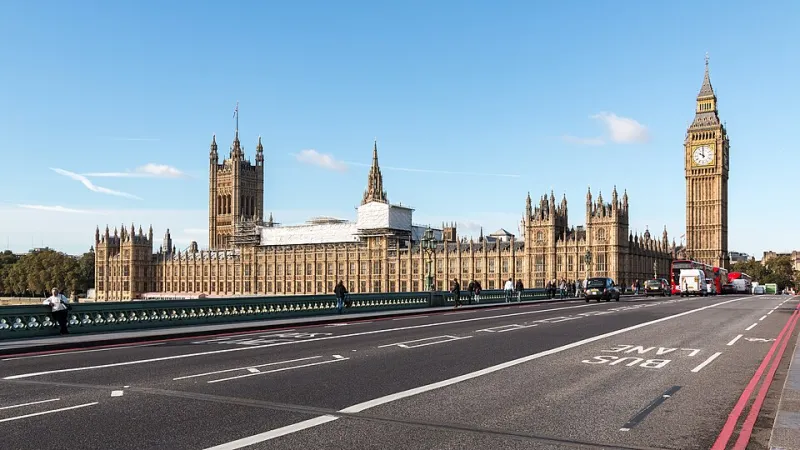
Photo: Dietmar Rabich, CC BY-SA 4.0, via Wikimedia Commons
Emergency powers are the constitutional equivalent of a fire extinguisher: essential when the building is alight, dangerous when left in the wrong hands without a service record. Britain’s principal emergency statute, the Civil Contingencies Act 2004, was designed with that tension in mind. Part 2 allows ministers to make emergency regulations in defined circumstances, subject to parliamentary approval and periodic renewal. The architecture is sensible in outline. The weakness lies in the absence of a final clock.
The Act We Have
The 2004 Act sets a high legal threshold. An emergency must threaten serious damage to human welfare, the environment or the security of the United Kingdom. Emergency regulations must be necessary, proportionate and compatible with human rights. They are also meant to be exceptional. In practice, the Act’s Part 2 powers have been used sparingly. The Covid-19 response relied principally on the Coronavirus Act 2020 and the Public Health (Control of Disease) Act 1984, not the Civil Contingencies Act. That is not a reason for complacency. It shows that emergency law is a portfolio of statutes, conventions and delegated powers, and the 2004 Act remains the constitutional template for executive emergency rule-making.
The scrutiny is thinner than the threshold suggests. Emergency regulations can be made quickly and debated later. Parliament’s choice is often binary: approve or reject. A rejection may be presented as abandoning the vulnerable or denying the police the tools they need. That asymmetry favours the executive. The approval vote becomes a hostage exchange rather than a review. Renewals can follow at intervals, and while each renewal requires a resolution, there is no aggregate limit on how long the emergency regime may last. A temporary power can therefore become a standing licence, renewed because the political cost of ending it is higher than the cost of continuing it.
The Scrutiny Gap
The problem is not that ministers are acting in bad faith. It is that crisis law creates its own momentum. Departments build teams around emergency regulations. Local authorities adjust. Businesses plan. Interest groups lobby for continuation. By the time the first renewal debate arrives, the measures have acquired a constituency. The legal question — is the emergency still of the kind Parliament contemplated? — is often displaced by the operational question: would ending the powers cause disruption? Those are different questions, and only Parliament can answer the first.
A further gap is institutional. Select committees can inquire, but they are not designed for rapid, cross-cutting review of emergency regulations. The Joint Committee on Human Rights can examine liberty implications, and the Secondary Legislation Scrutiny Committee can flag procedure. Neither is a standing emergency auditor with a statutory timetable. Scrutiny happens, but it happens in fragments and often after the fact. In a crisis, after the fact is too late for liberties that have already been restricted.
A Statutory Clock
The centre-right case for reform is not libertarian absolutism. It is constitutional realism. The state must be able to act decisively in a genuine emergency. Refusing emergency powers is not a sign of virtue; it can be a sign of incapacity. But the same realism should insist that emergency government carries a visible clock. A minister who knows the powers will lapse will plan for transition. A minister who can renew indefinitely will not.
The most straightforward reform is a statutory 90-day hard stop. Emergency regulations made under the Civil Contingencies Act should cease to have effect 90 days after they are first made, unless Parliament has passed primary legislation to continue them. Within that period, renewals could still be approved at 30-day intervals, but they would be counted against a single aggregate limit. The hard stop would not prevent a rapid response. It would prevent a rapid response from becoming a permanent settlement by drift.
Alongside the sunset, Parliament should create an automatic review point. At 30 days, a joint committee of both Houses — for argument’s sake, a Joint Committee on Emergency Powers — should publish a short statutory report on necessity, proportionality and exit planning. The report would not bind ministers, but it would inform the renewal debate and give backbenchers a shared evidence base. At 60 days, a second review should follow. The aim is not to multiply committees. It is to ensure that the House of Commons votes on evidence rather than atmosphere.
Renewal on Evidence
A hard stop without a test is just a deadline. Ministers should also be required to publish a renewal statement before each 30-day extension. The statement should address four questions. First, does the emergency condition in the Act still exist? Second, are the specific regulations still necessary and proportionate? Third, what alternatives have been considered? Fourth, what are the measurable exit milestones? The statement should be signed by the responsible minister and laid before Parliament. It should also record consultation with the devolved administrations where devolved competences are engaged.
This is not bureaucratic ornament. It is the discipline that crisis government needs. The Covid-19 experience showed how difficult it is to unwind emergency measures once they are embedded. A published renewal test would force departments to say, in plain language, what would need to be true for a restriction to end. It would also give the courts and the public a clearer record of the reasoning. The test should be reviewable, but not a vehicle for judges to substitute their judgment for ministers on operational matters. The constitutional point is transparency and accountability, not litigation.
The Conservative Case
Conservatives should be the first to distrust concentrated power without a timer. The emergency power is the most concentrated power the executive can claim in peacetime. It can touch assembly, movement, property and business. It deserves the strongest safeguards, not because ministers are uniquely dangerous, but because all ministers are human. The case for a 90-day sunset is the same as the case for a budget cycle or an annual audit: good government depends on forced reflection.
Liberty and executive competence are not opposites. A state that can act quickly and stop cleanly is more trustworthy than one that acts quickly and never leaves. Britain’s emergency powers should be built for the short, sharp crisis. A statutory clock, automatic review and a published renewal test would make that intention real. The alternative is a standing licence dressed as a temporary measure — and that is not a constitution any conservative should defend.