The Scrutiny Gap: Why Statutory Instruments Need a New Constitutional Settlement

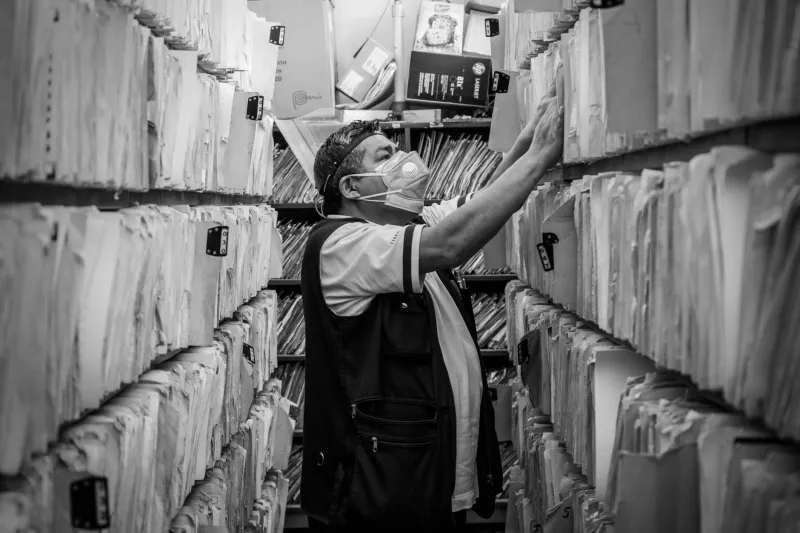
Photo: Press Information Department, Public domain, via Wikimedia Commons
Statutory instruments are where much of modern government actually happens. Fees are set, offences created, regulators reshaped, benefits adjusted and planning rules rewritten by secondary legislation. Around three thousand instruments are laid before Parliament in a typical year, but only a small fraction are debated on the floor or in committee. The result is a familiar constitutional imbalance: primary legislation receives the attention, while delegated legislation receives the nod.
The 2026 session has made the imbalance harder to ignore. Bills have continued the habit of taking broad powers to amend primary legislation, to set conditions by regulation and to reshape public bodies with limited statutory detail. Some of this is inevitable. No Parliament can specify every operational detail in statute. But the case for a new scrutiny model rests not on opposition to delegated legislation. It rests on the constitutional principle that Parliament should not outsource law-making without retaining meaningful control.
The scale of the transfer
Delegated legislation is not a marginal administrative convenience. It is a primary mode of governance. When a bill creates a framework and leaves the substance to regulations, the regulations are the law the public experiences. When a minister takes a Henry VIII power to amend primary legislation by statutory instrument, the constitutional centre of gravity moves. When a bill allows fees, standards or duties to be set by regulation, Parliament is choosing to legislate at a distance.
That choice can be justified. Speed, technical expertise and flexibility all matter. But the justification should be matched by scrutiny proportionate to the power transferred. Too often it is not. The negative procedure allows an instrument to become law unless it is annulled within a short window, and annulment is rarely moved. The affirmative procedure requires a vote, but debate is often brief, amendments are impossible and the vote frequently follows a whipped certainty. The language of approval can conceal a culture of acquiescence.
How scrutiny falls short
The existing committee architecture does valuable technical work. The Joint Committee on Statutory Instruments checks vires, drafting and legal form. The Lords Secondary Legislation Scrutiny Committee examines merits and has developed a useful practice of drawing attention to instruments of constitutional significance. But the system remains fragmented and reactive. Committees can report; they cannot require changes. They can draw attention; they cannot guarantee time. They can recommend annulment; they cannot supply the political momentum to achieve it.
The 2026 bills have exposed three further weaknesses. First, skeleton bills leave too much to later instruments, so Parliament votes on a frame and not the picture. Second, broad delegated powers are often accompanied by inadequate delegated powers memoranda, which describe the power but not its likely use. Third, the urgency procedure is too easily normalised: instruments made before approval, with only retrospective scrutiny, can become a habit rather than an exception.
The case for affirmative-plus
A reinforced procedure should replace the binary choice between negative and affirmative instruments. Call it affirmative-plus. The draft instrument would be published at least forty sitting days before the proposed approval motion. The scrutiny committee would be able to take evidence, require a minister to appear and publish a report on vires, merits and constitutional significance. The minister would be required to respond in writing before the vote.
Where the committee recommends changes, the minister would have to re-lay a revised draft or explain on the record why the recommendation is rejected. The House would then approve, reject or defer. The instrument would still not be amendable in the ordinary sense, because that would complicate the parent Act and invite drafting chaos. But the political cost of ignoring a reasoned committee report would rise sharply. That is the point: scrutiny should change behaviour before it changes text.
Urgency should be narrowed. A made-affirmative procedure could be retained for genuine emergencies, but with a seven-day limit for laying, a ninety-day sunset unless approved and a requirement that the minister publish the legal advice on urgency. Emergencies are real; the exception should not become the operating system.
A committee with teeth
Procedure alone will not solve a cultural problem. Parliament needs a standing committee on delegated legislation with a statutory remit, cross-party membership and its own legal counsel. It should have the power to require documents from departments, to summon ministers, to refer instruments to the floor and to trigger a mandatory debate where it finds a significant constitutional issue. It should report annually on the use of delegated powers across government, not merely instrument by instrument.
Such a committee would not be a rival legislature. It would be Parliament doing its own job. The case is conservative in the proper sense: it defends parliamentary authority against the quiet accumulation of executive discretion. It is also practical. Better scrutiny reduces the risk of litigation, improves drafting and gives ministers a clearer mandate when they act.
Beyond procedure
The deeper reform is transparency. Every bill that delegates significant power should be accompanied by a delegated powers audit before royal assent, setting out what is being transferred, why and with what safeguards. Framework bills should carry sunset clauses for the broadest powers. Departments should publish draft instruments earlier where consultation is possible. Parliament should treat delegated legislation as law, not as administrative housekeeping.
The courts will continue to review statutory instruments for legality, and they should. But the primary answer to the scrutiny gap is not judicial. It is parliamentary. A constitution that prizes sovereignty cannot be indifferent to how sovereignty is exercised in practice. In 2026, with secondary legislation carrying more weight than ever, the case for affirmative-plus and a scrutiny committee with teeth is not a technical tweak. It is a constitutional necessity.