Short Sessions, Thin Scrutiny: The Case for a Prorogation Floor
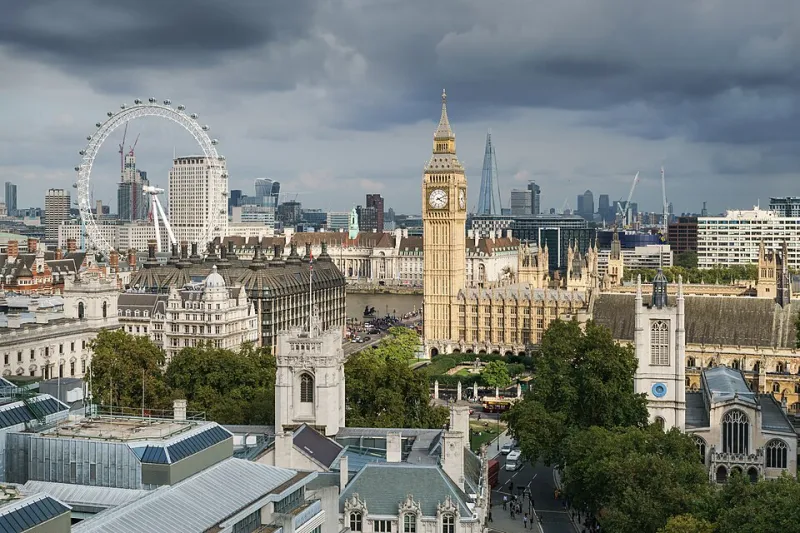
Photo: Colin, CC BY-SA 4.0, via Wikimedia Commons
The 2019 prorogation litigation is often remembered as a confrontation between Boris Johnson’s government and the Supreme Court. It was that, but it was also something more ordinary: a dispute about parliamentary time. The court held that the advice to prorogue for five weeks was unlawful because it had the effect of frustrating Parliament’s constitutional functions without reasonable justification. The judgment was decisive on the facts. It was not a general settlement of how short a session may be.
That gap matters. Prorogation remains a prerogative power. A government can still end a session, reset the legislative programme and send MPs home. In most circumstances that is legitimate housekeeping. But there is no statutory floor below which a session becomes too short for meaningful scrutiny. The result is that the most important check on the executive—time in the Commons—can be curtailed by the executive itself.
What 2019 settled—and what it did not
The Supreme Court’s judgment established that prorogation is justiciable and that the effect on Parliament is relevant. It did not establish a minimum session length. It did not say how many sitting days are needed for a Queen’s Speech, bill stages, select committees, estimates and opposition days to function properly. It did not create a test that could be applied in advance. It answered the legal question before it; it left the political question open.
That is why the debate since 2019 has been oddly inconclusive. Critics of the government treat any early prorogation as an abuse. Defenders treat any judicial involvement as an intrusion. Both sides miss the institutional point. The problem is not that prorogation exists. The problem is that there is no agreed constitutional minimum for the scrutiny that a session is supposed to contain.
The 2026 temptation
In 2026 the temptation to shorten sessions is real. The legislative timetable is crowded. Bills compete for time. A government with a large programme may prefer to cut a session short, reset the narrative and avoid awkward committee stages. A government with a small majority may find that time is its most precious resource—and its most tempting tool.
Short sessions are not automatically abusive. They can be a sensible response to a dead Parliament or a stalled agenda. But the cumulative effect of truncated sessions is corrosive. Bills are guillotined. Committees lose the chance to take evidence. Statutory instruments receive less scrutiny. The estimates process becomes a formality. A session of a few weeks is not a session; it is a photo opportunity.
The constitutional cost is not measured only in laws passed. It is measured in the habit of scrutiny. Parliament is a institution that works through repetition: questions, debates, committee reports, votes. A government that governs by truncated sessions does not merely win a tactical advantage. It weakens the institution it needs when the next crisis arrives.
Why a floor, not a ceiling
The remedy should be a floor, not a ceiling. A statutory minimum sitting period would not prevent prorogation. It would require that a session last long enough to do its job before it can be ended. A ceiling would be a different and more dangerous idea: it would limit how long Parliament may sit. That would invert the constitutional relationship. The executive should not be able to shut Parliament down too early; nor should it be able to keep it sitting indefinitely as a decorative cover for government by decree.
A floor is conservative in the proper sense. It preserves the prerogative while disciplining its use. It accepts that governments need flexibility to manage the legislative programme. It accepts that emergencies happen. But it insists that flexibility be exercised within a framework that protects the core function of the Commons.
Designing the floor
A workable statute would set a minimum number of sitting days for each session—say, ninety days—or a calendar-year floor of one hundred sitting days, with the details left to standing orders. It would allow prorogation only after that floor had been met, unless both Houses approved an emergency certificate. The certificate should be narrow: a national emergency that makes sitting unsafe, an imminent general election, or a constitutional necessity certified by the Speaker. It should be debated and time-limited.
The courts should not be asked to manage the parliamentary calendar. Judicial review should be available only for the legality of the certificate, not for the political merits of prorogation. That keeps the floor political, transparent and democratically accountable.
The conservative case
The case for a floor is not that Parliament should be sovereign in every detail. It is that Parliament must be able to scrutinise the executive that is drawn from it. A government that can shorten a session at will can mute the very body that gives it legitimacy. A statutory minimum is a modest correction: it does not transfer power to judges, and it does not abolish the prerogative. It sets a constitutional baseline for scrutiny.
After 2019, the legal question is settled. The political question is not. A prorogation floor would answer it without another courtroom drama—and would do so in a way that strengthens Parliament, not the courts.