A Narrow Writ: Why Constitutional Limits Need a Lawful Plaintiff

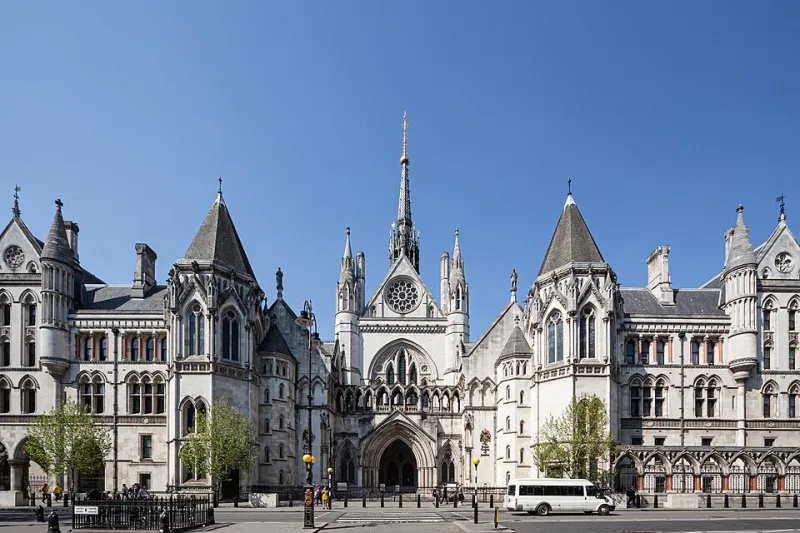
Photo: Andrew Le Sueur, CC BY-SA 3.0, via Wikimedia Commons
Public law in the United Kingdom has a standing problem, but not the one most commonly described. The familiar complaint is that judicial review is too easy to bring. The more precise difficulty is that some constitutional questions are hard to bring at all, because nobody has the kind of interest the courts recognise. That gap deserves a measured response: not general public interest standing, and certainly not a new form of abstract constitutional review, but a narrow statutory exception for a closed list of institutional claimants.
The Strength of the Sufficient Interest Test
The starting point is sound. Since the House of Lords’ decision in Inland Revenue Commissioners v National Federation of Self-Employed and Small Businesses in 1982, English law has asked whether a claimant has a sufficient interest in the matter to which the application relates. The test is broad, but it is not a blank cheque. Judges examine the relationship between the claimant and the decision, the statutory scheme, and the nature of the alleged error. The Court of Appeal and Supreme Court have repeatedly warned that judicial review is not a remedy for the merely concerned citizen.
That is as it should be. Judicial review is a supervisory jurisdiction, not a roving commission. It protects individuals and bodies affected by unlawful action, and it preserves the rule of law by ensuring that public authorities stay within their legal powers. A loose standing rule would invite campaigns to litigate policy disagreements under the guise of legality. It would strain the courts, distort administration, and blur the line between legal argument and political complaint. For ordinary disputes, the sufficient interest test strikes a sensible balance.
The constitutional difficulty arises elsewhere. Some legal limits are not owed to any particular individual. They are limits on how the constitution itself operates: the scope of prerogative power, the conditions attached to emergency legislation, the boundaries of devolved competence, the lawful basis for dissolving or proroguing Parliament, and the proper relationship between statute and convention where convention has been partly codified. When those limits are breached, the person with the clearest interest may be Parliament, a future Parliament, or the public as a whole. None of those is an easy claimant.
Where the Gap Bites
The courts have been candid about this. They do not give advisory opinions, and they do not decide constitutional questions in the abstract. A claimant must point to an actual or proposed exercise of public power and a legal flaw in it. That requirement is a virtue, not a defect. But it means that constitutional legality is tested only when a suitable claimant happens to exist. The 2019 prorogation litigation was a notable example: the case reached the Supreme Court because a number of claimants, including Gina Miller and the Scottish courts, had the resources and the standing to pursue it. The constitutional principle was clarified, but the route to clarification depended on contingency rather than design.
That contingency is tolerable when the issue is urgent and visible. It is less tolerable when the issue is technical, slow-moving, or institutional. A parliamentary committee may publish a report saying that a department has misread a constitutional statute. A constitutional officer may warn that a decision exceeds a legal limit. Yet neither can ordinarily ask a court to rule on the point unless a private claimant with sufficient interest can be found. The result is a constitution whose legal limits are enforced unevenly: robustly where a well-funded litigant is available, faintly where the issue is abstract but important.
The Attorney General has a role, including in relator actions, but that role is necessarily political as well as legal. It cannot be the only route for testing constitutional limits, because the law officer is a member of the government whose action may be in question. The same is true of departments. Parliament itself can debate and demand documents, but debate is not adjudication. A select committee can expose a problem; it cannot obtain a binding declaration that a power has been exceeded.
A Statutory Exception, Not a Revolution
The case for reform is therefore narrow. Parliament should create a statutory standing exception for specified institutional claimants, confined to legal questions about constitutional limits. The exception should be a canal, not a floodplain.
First, the list of claimants should be closed. It should include designated parliamentary committees with a constitutional remit, such as the Commons Public Administration and Constitutional Affairs Committee and the Lords Constitution Committee, acting by resolution. It should also include a small number of constitutional officers whose functions are legal rather than policy-driven: the Comptroller and Auditor General on public finance and constitutional propriety, the Electoral Commission on electoral law, and the Information Commissioner on transparency and data law where constitutional principles are engaged. The Attorney General might be included for declaratory references, but only with safeguards against using the power to shield the executive.
Second, the subject matter should be closed. Standing should arise only where the claimant alleges that a public authority has acted, or proposes to act, outside a legal limit on its constitutional power. It should not extend to the merits of policy, the rationality of a decision, or the general desirability of legislation. Convention alone should not be litigable unless it has been recognised in law or is necessary to interpret a statutory scheme. This preserves the distinction between legal review and political argument.
Third, there must be an actual decision or omission. No hypothetical questions, no advisory opinions, and no pre-emptive challenges to bills before Royal Assent. The court should retain a leave filter, asking whether the issue is arguable, whether it is suitable for judicial determination, and whether an alternative remedy exists. Remedies should ordinarily be declaratory. In urgent cases, the court could quash a decision, but the default should be a declaration that identifies the legal limit without directing policy.
Fourth, parliamentary privilege must be expressly preserved. The courts should not review proceedings in Parliament, question the internal decisions of committees, or adjudicate on the exercise of free speech in the Commons or the Lords. A committee resolution should be a gateway to standing, not a judicial review of the committee itself.
Finally, the reform should be reviewed. A five-year statutory review, with a report to Parliament, would allow the Lord Chancellor and the Justice Committee to assess whether the exception has been used responsibly. If it has not, it can be narrowed or repealed. That is the conservative way to reform: test the mechanism, limit the risk, and keep the burden of proof on those who would expand state or judicial power.
The Constitutional Case
This is not an argument for judges to govern. It is an argument for legal limits to be adjudicated when they are genuinely in dispute. The constitution depends on institutions that can defend their own boundaries. Parliament can scrutinise, but it cannot always litigate. The courts can adjudicate, but they cannot invent a claimant. A closed statutory standing exception bridges that gap without handing pressure groups a general key to the courthouse.
In 2026, as Westminster considers another dense legislative programme, the question is worth putting plainly: if a constitutional limit is breached but no individual is sufficiently affected, who gets to ask the court? At present, the answer is whoever happens to be available. A narrow writ would supply a better answer without turning judicial review into a permanent constitutional convention.