The Unrecorded Room: Putting Ministerial Subgroups on the Constitutional Map

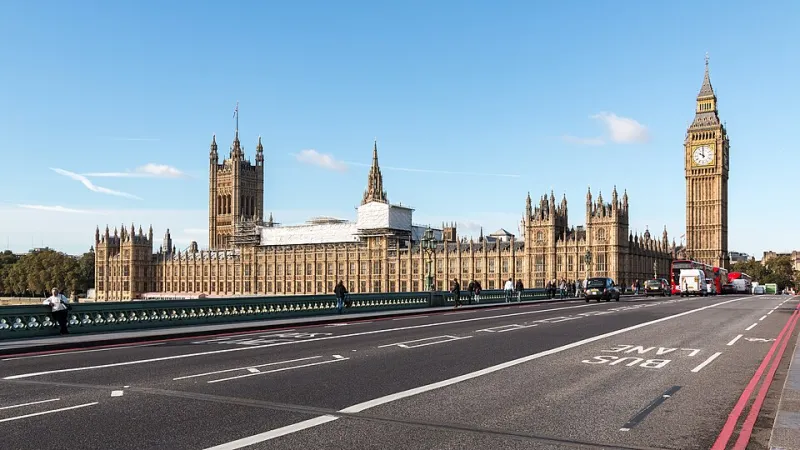
Photo: Achim Hering, CC BY 3.0, via Wikimedia Commons
British government has always done some of its most consequential business in rooms that leave no paper behind. The formal architecture—Cabinet, its committees, the Cabinet Office secretariat—is well understood. Less well understood is the penumbra: ad hoc groups of ministers, breakfast meetings, informal clusters convened around a departmental secretary of state. These bodies can resolve spending priorities, settle negotiating positions, or bless a policy direction before it reaches any minuted forum. When they do, the constitution asks a simple question: where was the decision taken, by whom, and on what advice? Too often, the answer is nowhere on the record.
The gap in the chain
Ministerial accountability rests on a chain of explanation. Parliament authorises money and law; ministers exercise power; officials advise; select committees scrutinise; courts review legality. Each link assumes that the exercise of power can be located. Informal subgroups break that assumption. They are not unlawful. Indeed, small groups of ministers can cut through departmental silos and impose collective discipline. But when a subgroup’s conclusion hardens into policy, the absence of a record leaves Parliament and the courts looking at an outcome with no visible author.
This is not a partisan complaint. It is a constitutional hygiene issue. A decision taken in an unrecorded meeting is still a decision. If it commits public expenditure, changes a negotiating mandate, or alters the implementation of a statute, it should be possible to establish the fact of the decision, the ministers present in their public capacity, and the material advice that framed it. Without that minimum, scrutiny becomes guesswork and litigation becomes archaeology.
What Parliament and the courts cannot see
Select committees can request papers, but a request is not a regime. Departments can decline, delay, or produce a summary that omits the operative decision. Freedom of Information provides a route to some material, but it is slow, easily frustrated by exemptions, and ill-suited to mapping the inner life of government. The courts face a sharper difficulty. Judicial review tests legality, rationality and procedural fairness. It does not ordinarily require reasons for every policy choice. Yet a reviewing court still needs to know who decided what. If the decision-making body is informal and unrecorded, the claimant cannot identify the target, and the court cannot test the reasoning. The result is not necessarily injustice in every case. It is a structural advantage for the executive.
Transparency is not disclosure
The objection most often heard in Whitehall is that ministers must be able to speak candidly. That objection is serious, but it is not an argument against records. It is an argument against disclosure of everything. The distinction matters. Transparency is a regime: a standing rule that certain categories of information are created, preserved and published. Disclosure is an event: the release of a particular document. A workable settlement should embrace the first and discipline the second.
A statutory duty should therefore require the creation and publication of two things: the agenda of a ministerial subgroup, and a decision record. It should not require a transcript of ministerial conversation, nor the publication of legal advice, nor every draft that crossed the room. Candid advice must remain candid. But the existence of a decision, the identity of the ministers who took it, and a summary of the material considerations should be publishable, subject to narrow redactions.
A workable standard for 2026
The 2026 session offers a practical opportunity. A Ministerial Subgroups (Records and Publication) Bill could set a clear standard without inventing a new bureaucracy.
First, define the body. A ministerial subgroup should mean any formal or informal group of two or more ministers convened to take collective business, whether or not it is called a committee. The definition should catch the substance, not the label.
Second, require a record within ten working days. The record should state the date, attendees in their ministerial capacity, the agenda, the decision reached, and a short summary of the advice considered. A designated senior official should certify that the record is complete.
Third, publish within twenty working days, with redactions limited to national security, international relations, law enforcement, personal data, and information subject to legal privilege. Redactions should be logged and certified by the Cabinet Secretary or a nominated deputy, with a route of appeal to the Information Commissioner.
Fourth, preserve the record. Destruction of a required record should be an offence, not an administrative lapse. The National Audit Office should have a power to audit compliance across departments, and the Cabinet Office should publish an annual compliance report.
Finally, make clear that a failure to record does not invalidate a decision. The remedy is political and administrative, not a field day for litigants. But the presumption should run against the executive: if a subgroup cannot produce a record, Parliament and the courts should be entitled to infer that the decision was not taken with the collective rigour the Ministerial Code promises.
The conservative case
Conservatives have always understood that institutions live or die by their ability to explain themselves. The case for a statutory record is not a case for performative openness. It is a case for order: a government that knows where its decisions are made is a government that can be held to account, and a Parliament that can see the chain of decision is a Parliament that can scrutinise with evidence rather than assertion. The unrecorded room is not a scandal in itself. It becomes one when the paper trail runs out and the public is asked to trust a conclusion whose author cannot be found.